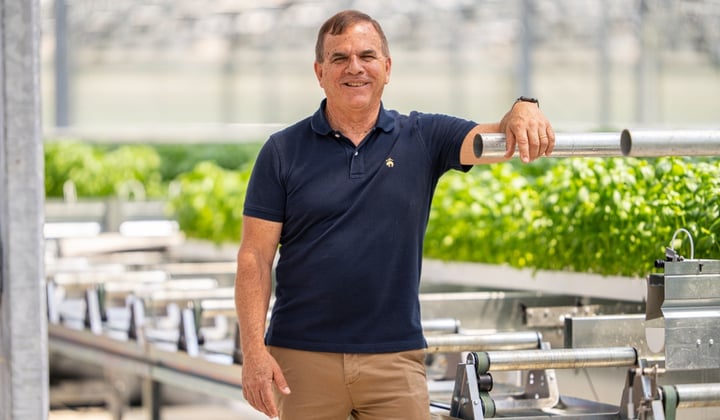
After more than 46 years in greenhouse production, Brian Murphy has seen the industry change dramatically. Today, rising labor costs, increasing competition, and the challenge of recruiting skilled employees are among the biggest issues facing growers.
As founder and President of Goodness Gardens, one of the largest fresh basil producers in the United States, Brian Murphy depends on experienced employees to keep production running smoothly. But rather than asking them to spend their day on repetitive, physically demanding work, he chose a different approach.
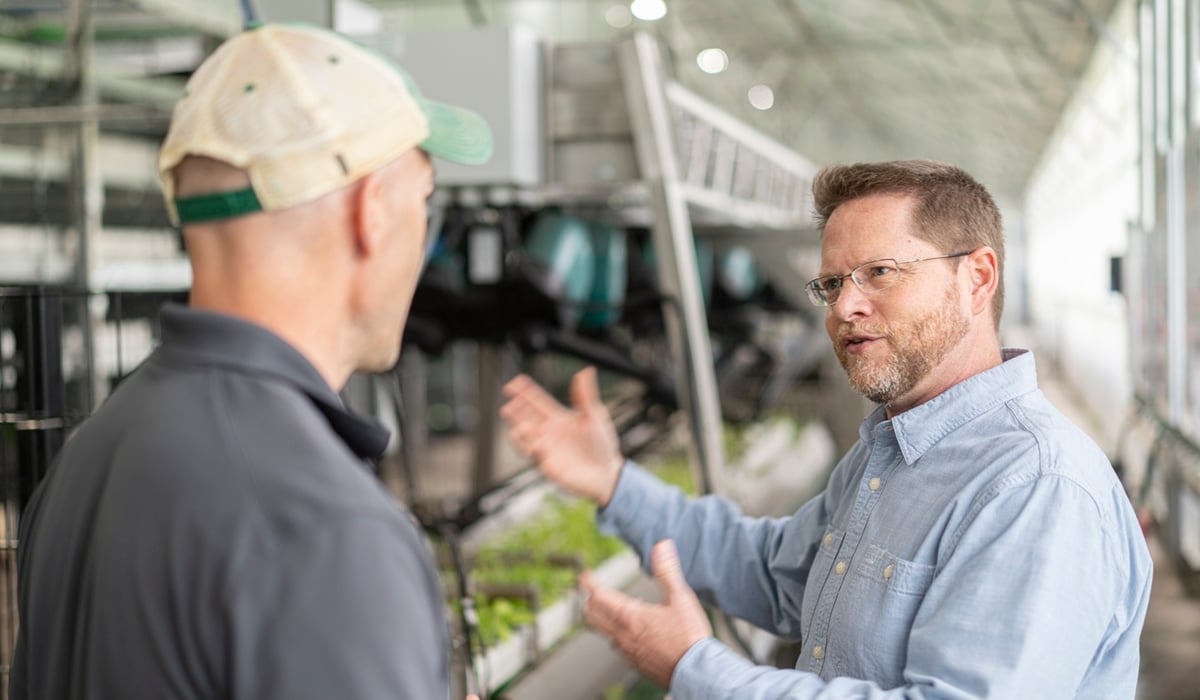
"Finding skilled workers for greenhouse production is becoming more difficult. We have some very competent employees, and I highly value what they bring to the company. I don't want them spending their day doing repetitive and dirty tasks if there is a better way," says Brian Murphy.
Removing a Bottleneck from Daily Production
One of the biggest bottlenecks was found at the end of the production process in Goodness Gardens' moving gutter system.
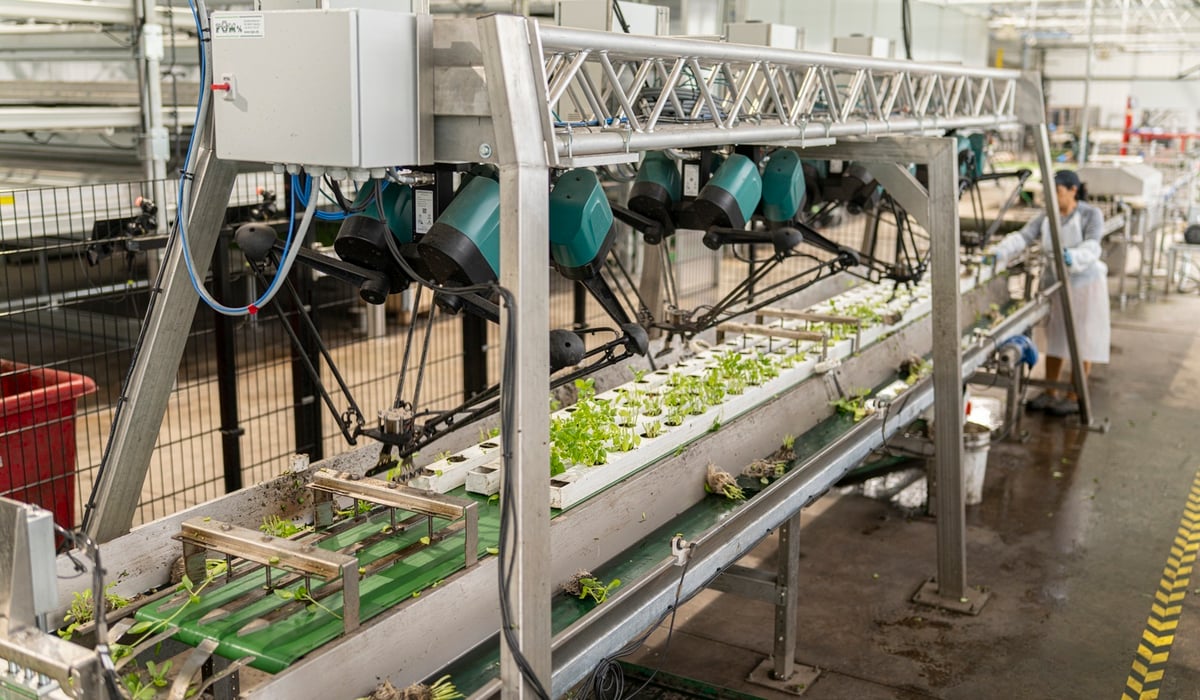
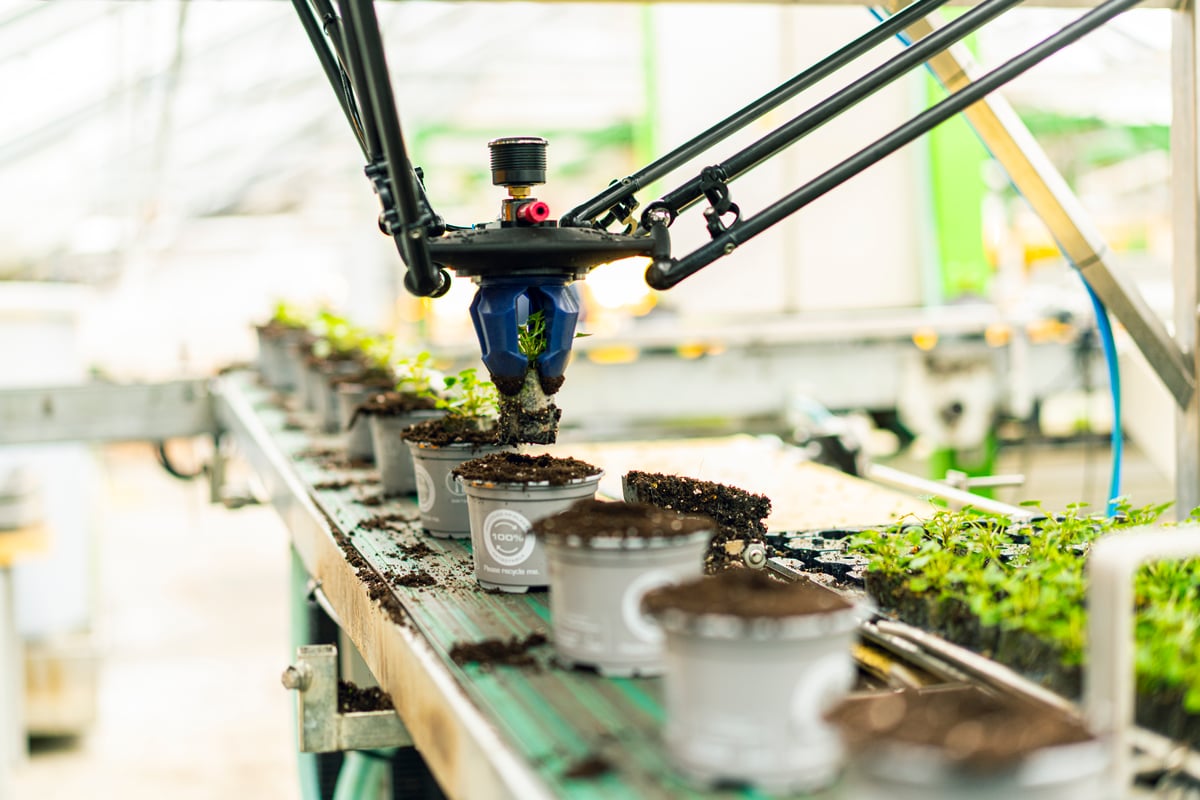
Once the basil had been harvested, employees manually removed the root systems from every growing gutter before the channels could be reused. It was dirty, repetitive work that tied up valuable labor every day and interrupted the production flow.
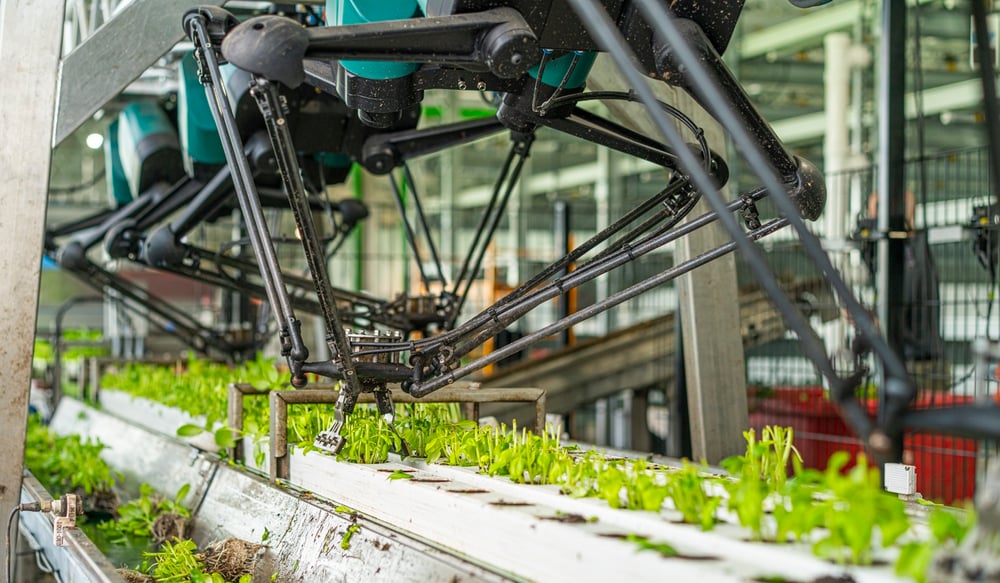
Today, the task is handled by the integrated solution from FGM with 4XROBOTS, combining FGM's moving gutter system expertise with four collaborative robots from Danish robotics company 4XROBOTS. The solution keeps production flowing continuously while eliminating one of the greenhouse's most repetitive manual tasks.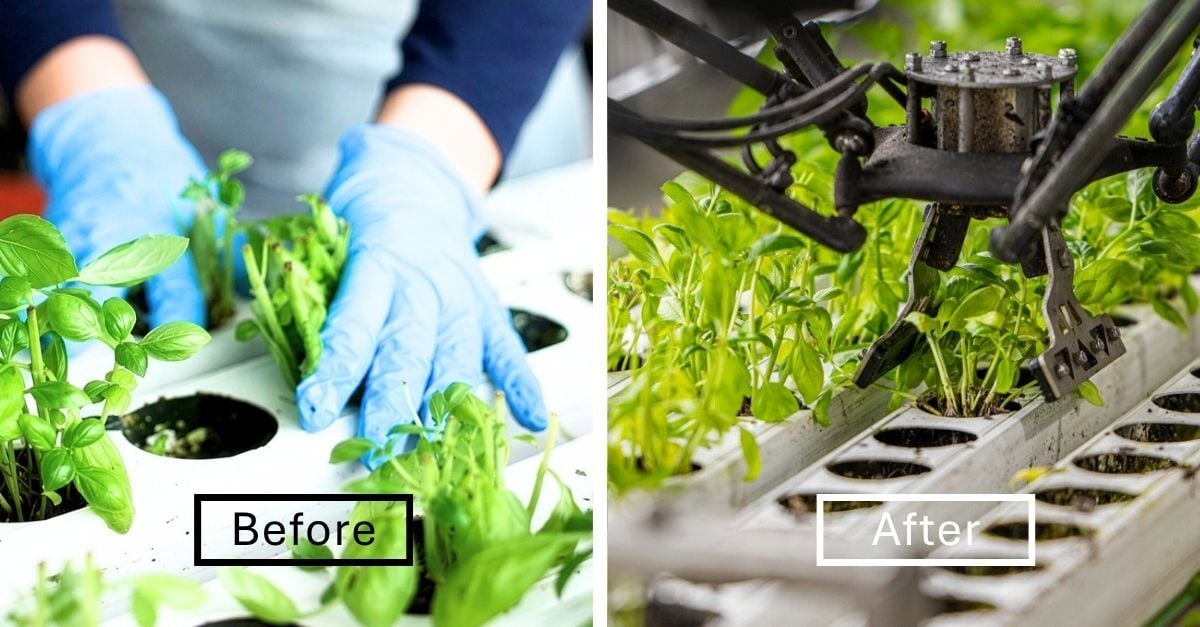 Goodness Gardens has worked with FGM for several years, and when the company expanded its newest greenhouse, the two companies collaborated to identify and automate one of the remaining production bottlenecks.
According to Brian Murphy, the impact was immediate.
"Before installing the robots, this part of the process was a potential bottleneck. Employees had to spend time emptying gutters by hand, which was dirty, repetitive work," he explains.
"Now the robots handle the task at a steady pace, and our employees can focus their time and energy on other parts of production where they create more value. Also, the process has been sped up by 100%, which means we are moving twice the amount of gutters in the same amount of time compared to before the upgrade.”
The robotic upgrade means that two of Bryans employees are now handling other jobs in the greenhouse, that demands their technical skills.
Watch the video to see the robots in action and hear the story directly from Goodness Garden:
Results at Goodness Gardens
Automation has made a clear difference in the day-to-day production at Goodness Gardens. A previously manual and time-consuming task is now handled by four collaborative robots from 4XROBOTS, integrated directly into FGM’s moving gutter system.
The solution has not only helped eliminate a bottleneck in production. It has also created a more stable production flow and freed employees from repetitive, physically demanding work, allowing them to focus their time and skills on other tasks in the greenhouse.
The results in practice
-
4 robots
Integrated directly into the production process
-
2 employees
Can now focus their time on other tasks that require their skills
-
50% higher productivity
At Goodness Gardens’ most automated greenhouse
-
100% improvement in efficiency
Of the previously manual process
For Goodness Gardens, automation is therefore about more than reducing the need for manual labor. It is also about creating a more stable and efficient production environment, where robots take care of repetitive tasks while employees can focus on the areas where their experience and skills create the most value.
More Than Labor Savings
While labor availability was one of the main reasons for investing in automation, Brian Murphy quickly experienced additional benefits.
The greenhouse owner now sees a clear difference between the company's most automated greenhouse and those that rely more heavily on manual labor.
"We operate greenhouses covering more than five acres, and I can clearly see a difference between our facilities," says Brian Murphy.
"Where automation has been implemented, the business is more profitable. Production becomes more predictable, workflows are more stable, and we are less dependent on finding people for repetitive tasks. Overall labor productivity has increased 50% across all system upgrades, and the robots are a part of that."
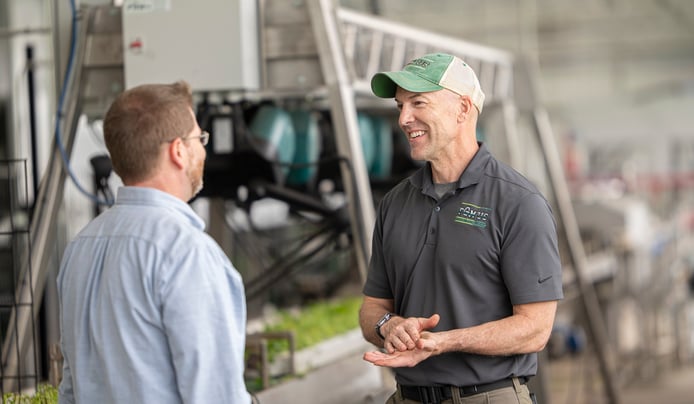
According to Evan Sharples from FGM, successful automation is about much more than replacing manual work.
"Our role is to understand the grower's production and identify where automation creates the greatest value," says Evan Sharples.
"Together with Goodness Gardens and 4XROBOTS, we developed an integrated solution that removes a critical production bottleneck while fitting seamlessly into the existing greenhouse operation. Beyond labor savings, the solution also improves production flow, reduces unnecessary product handling, and allows skilled employees to focus on the work where they create the greatest value."
Automation Should Support People
For Brian Murphy, automation is not about replacing employees. It is about strengthening business by allowing people to contribute where their skills matter most.
That is why he believes collaborative robotics will play an increasingly important role in greenhouse production in the years ahead.
"The return on investment is very reasonable, but what matters most is that we can build a stronger operation around our employees. When people spend less time on repetitive work and more time applying their knowledge and experience, everybody benefits," Brian concludes.
The integrated solution from FGM with 4XROBOTS combines greenhouse production expertise with collaborative robotics to help growers remove production bottlenecks, improve working conditions, and build more efficient and resilient greenhouse operations.
Watch the video to see the robots in action and hear the story directly from Goodness Garden :
Learn more about the robot here
Learn more about greenhouse automation
Explore more topics related to greenhouse automation: