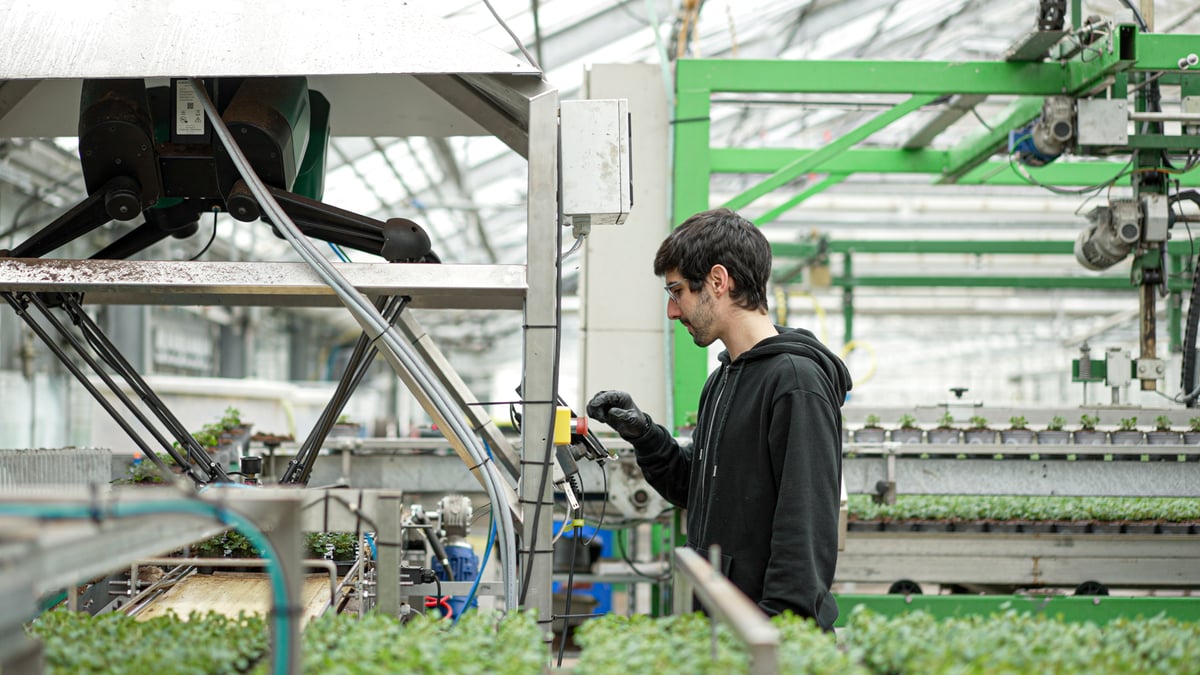
In many greenhouse production lines, trays and pots move along rectangular conveyor systems. Traditional delta robots, however, are designed with a circular working area, which does not always align well with this layout.
Delta robots are widely used in industrial automation for fast pick-and-place operations. Their lightweight design and high speed make them ideal for tasks that require precision and rapid movement.To address this challenge, the collaborative robot from 4XROBOTS uses a four-arm delta design, creating a square working area that better matches greenhouse workflows.
What is a four-arm delta robot?
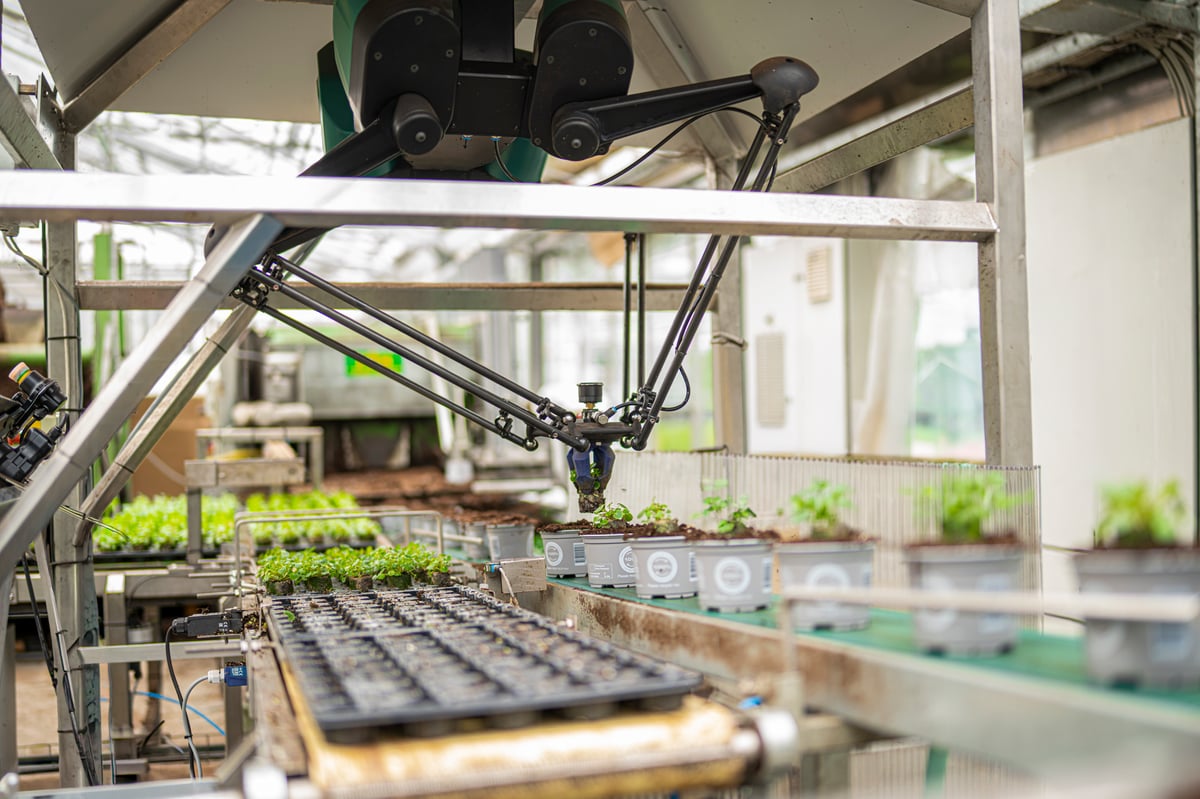
A four-arm delta robot is a type of high-speed pick-and-place robot designed to operate above a work surface such as a conveyor belt. While traditional delta robots typically use three arms, creating a circular workspace, a four-arm design creates a square and wider working area.
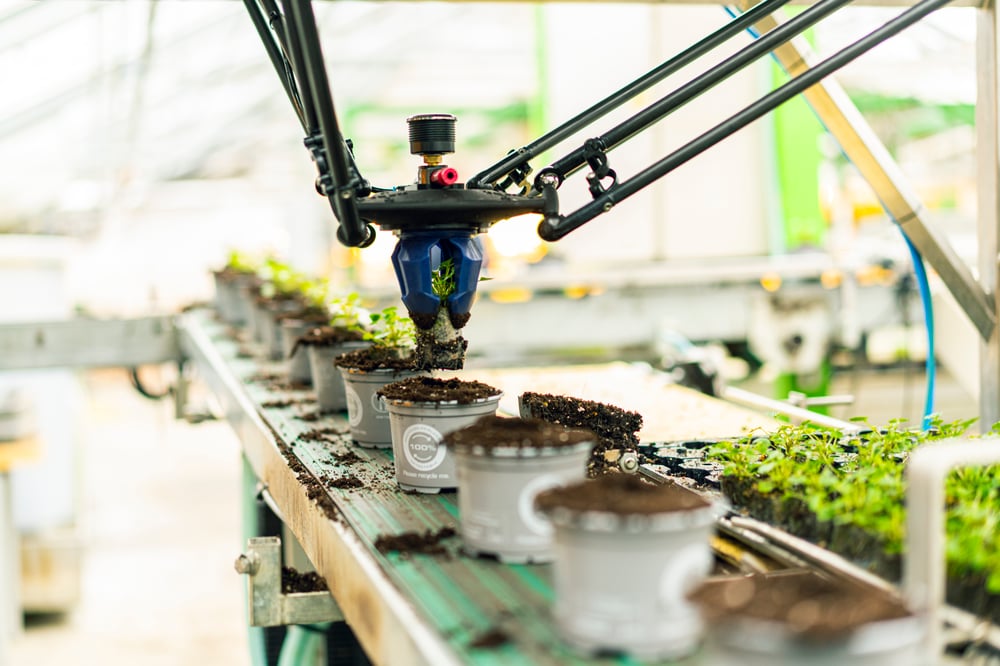
In greenhouse production, where trays and pots move along rectangular conveyors, this square workspace allows the robot to cover the production line more efficiently.
This makes four-arm delta robots particularly well suited for tasks such as:
- transplanting cuttings
- tray handling
- packing vegetables
- pick-and-place operations in greenhouse production
Learn more about the robot technology here
Four-armed delta robots increases workspace
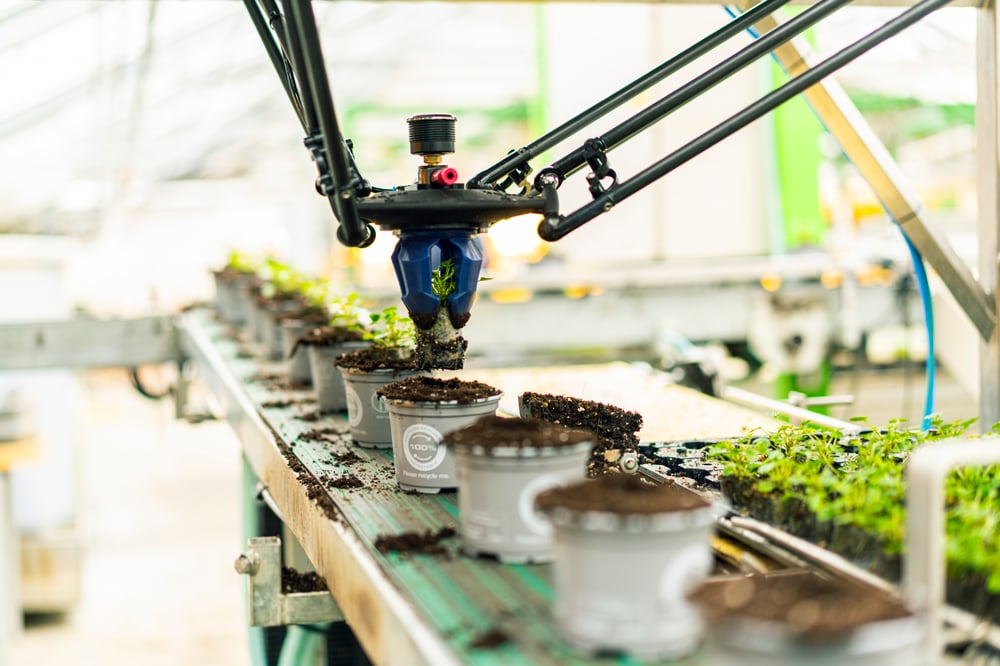
By adding a fourth arm, the 4XROBOTS robot creates a rectangular and wider working field instead of a circular one.
This geometry aligns far better with typical greenhouse layouts, especially when the robot is mounted above a conveyor system in a gantry.
The result is several practical advantages:
- improved coverage of rectangular conveyor belts
- more efficient use of the robot's reach
- better handling of trays and pots
- fewer unreachable corners in the work area
This allows the robot to match the geometry of the production line instead of forcing the production line to adapt to the robot.
Optimized for greenhouse automation
The four-arm design was developed specifically for horticultural automation, where robots often operate above rectangular conveyor systems handling trays and pots.
Typical applications include:
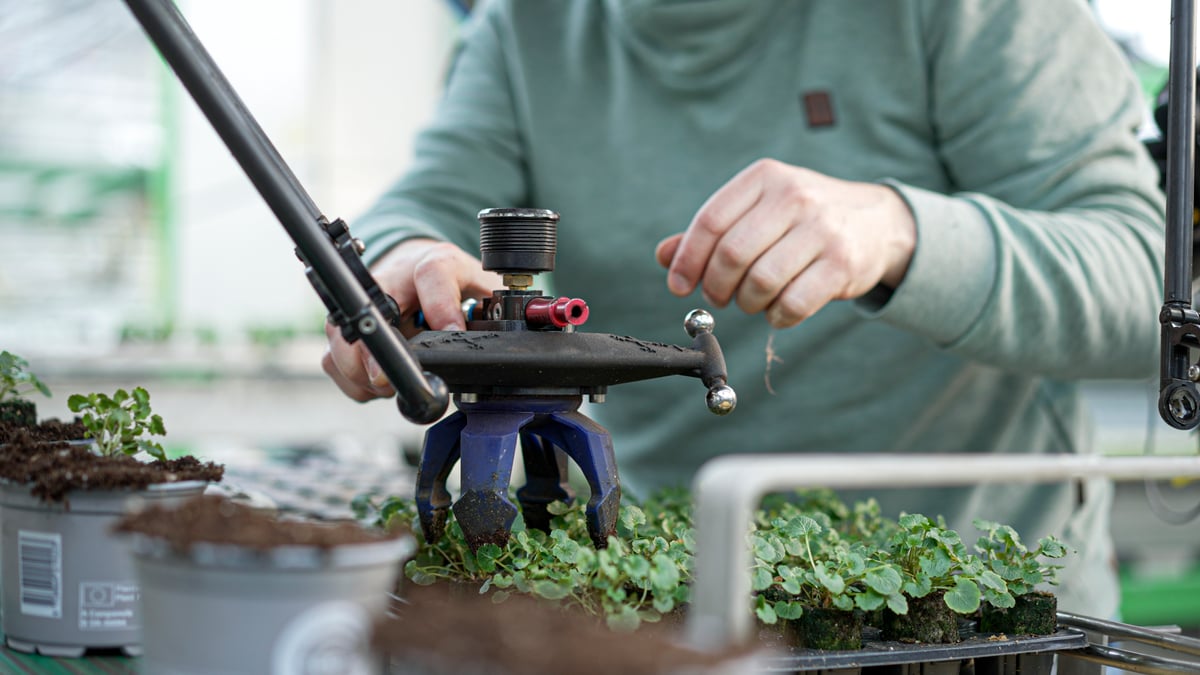
- plant propagation tasks such as transplanting cuttings or plugs
- tray handling
- extracting roots from Moving Gutter Systems
- packaging operations
Small design change, big operational impact
Small engineering improvements like this can have a significant impact on daily production efficiency in greenhouse operations.
These advantages are already visible in real greenhouse production environments. At Rosa Danica in Denmark (now part of the horticulture group By Growers) a four-arm collaborative robot from 4XROBOTS is used for transplanting cuttings directly above the conveyor line.
According to Torben Moth Madsen, Founder of Rosa Danica (By Growers), one of the major benefits was how easily the robot could be integrated into the existing production setup:
“It is a very affordable and effective investment, as it didn’t require us to change our process line. The robot fits over the conveyor and doesn’t take up much space in the greenhouse, as it doesn’t need to be enclosed by safety fencing.
We also had a very smooth start with the robot on the process line. In fact, we could keep production running while it was being installed because it can work side by side with our employees.”
Read the full story about the installation here
Geometry matters in automation
At first glance, the difference between three and four arms may seem like a minor technical adjustment. But in automation design, geometry plays a critical role.
When the robot’s working area matches the layout of the production line, growers can achieve more efficient automation without redesigning their existing systems.
For greenhouse operators looking to implement advanced horticulture robotics, engineering improvements like this can make a meaningful difference in everyday production.
Learn more about collaborative robots developed for greenhouse production