Greenhouse production is constantly evolving. Growers must manage changing crops, seasonal workflows and increasing pressure to produce more with fewer workers. Labour shortages, rising production costs and increasing quality demands are pushing many greenhouse operators to explore automation.
However, one important challenge remains: greenhouse production rarely stays the same throughout the year.
Different crops, seasonal workflows and changing production volumes mean that many growers rarely perform the same task all year round. For this reason, flexibility has become one of the most important factors when implementing automation in horticulture.
Many traditional automation systems are designed for a single purpose. Once installed, they are difficult to modify or move. But in horticulture, where production conditions change frequently, growers often need technology that can adapt;
This is where flexible collaborative robots can make a significant difference.
Learn more about the robot platform here
Why flexibility matters in horticulture automation
Across the horticulture industry, several challenges are pushing growers to explore automation:
-
labour shortages in horticulture
-
rising production costs
-
increasing demand for consistent plant quality
-
pressure to scale production efficiently
Traditionally, growers have often invested in hard automation systems designed to automate one specific task.
In greenhouse production, however, automation may support several processes such as plant propagation, transplanting cuttings and tray handling.
A flexible robot that can move between tasks offers a more practical approach to greenhouse automation.
Changing tasks by switching tools
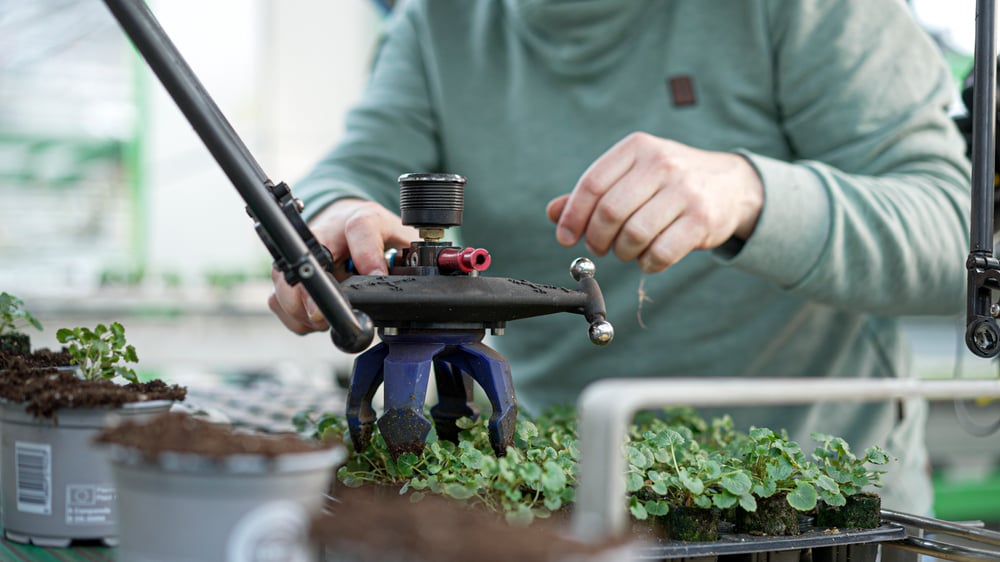
Another key aspect of the robot’s flexibility is the tooling system.
By simply changing the robot’s tool, the same robot can perform completely different tasks within the greenhouse production process.
For example:
-
one tool may be designed for planting cuttings
-
another may handle trays or pots
-
another may be used for packing vegetable
This simple adjustment allows growers to adapt the robot to different production workflows without replacing the machine itself.
For greenhouses that work with multiple crops or seasonal production changes, this adaptability can be extremely valuable.
A lightweight robot designed for flexible production
The collaborative robot developed by 4XROBOTS weighs only around 35 kilograms, making it significantly easier to move between production lines compared with traditional automation systems.
Instead of installing a fixed machine that only handles one task, growers can redeploy the robot wherever it creates the most value at the time.
Typical applications include:
-
transplanting cuttings
-
handling trays and pots
-
packing vegetables such as cucumbers or lettuce
-
pick-and-place operations in packing lines
This mobility allows growers to gradually automate multiple processes without committing to a large fixed system.
You can explore these greenhouse automation applications here
Designed for real greenhouse environments
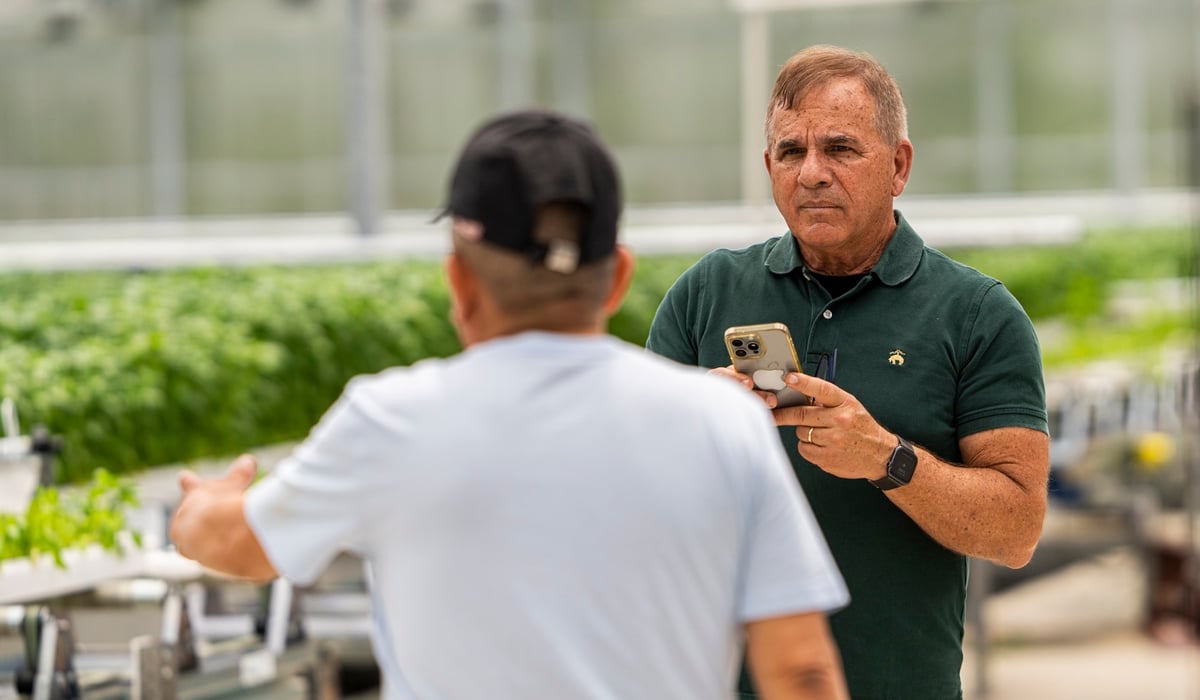
According to Michael Møller Nielsen, co-founder of 4XROBOTS, flexibility was a key design priority from the beginning.
“Greenhouse production environments are dynamic. Equipment must integrate easily into existing workflows and adapt to changing needs. By designing a robot that is lightweight, mobile and easy to reconfigure, growers can start small and expand automation gradually.”
Flexible automation allows growers to take a more practical approach to robotics. Instead of installing one large system designed for a single task, a flexible collaborative robot can support multiple parts of the production process.
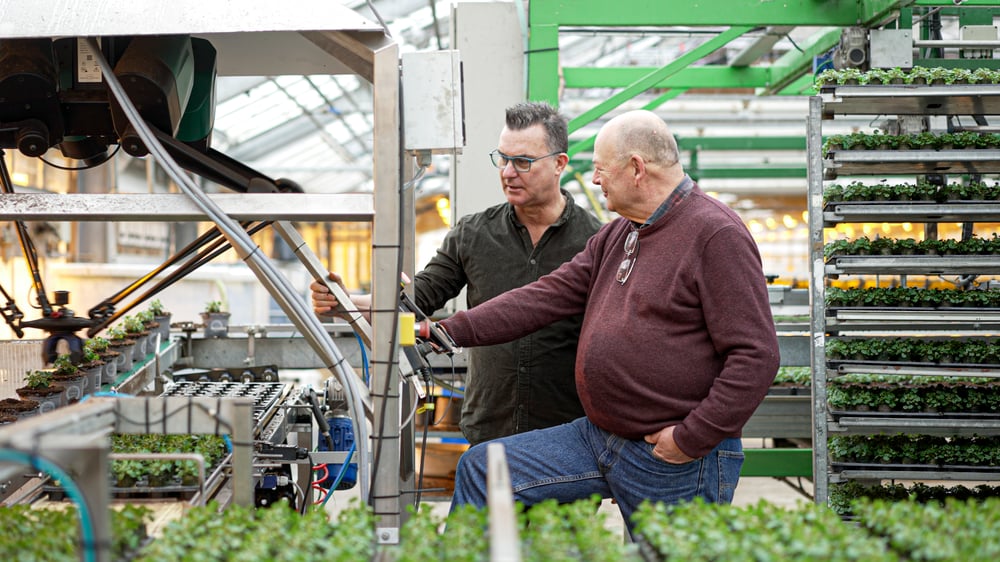
A practical example of flexible automation in greenhouse production can be seen at Rosa Danica in Denmark, now part of the horticulture group ByGrowers.
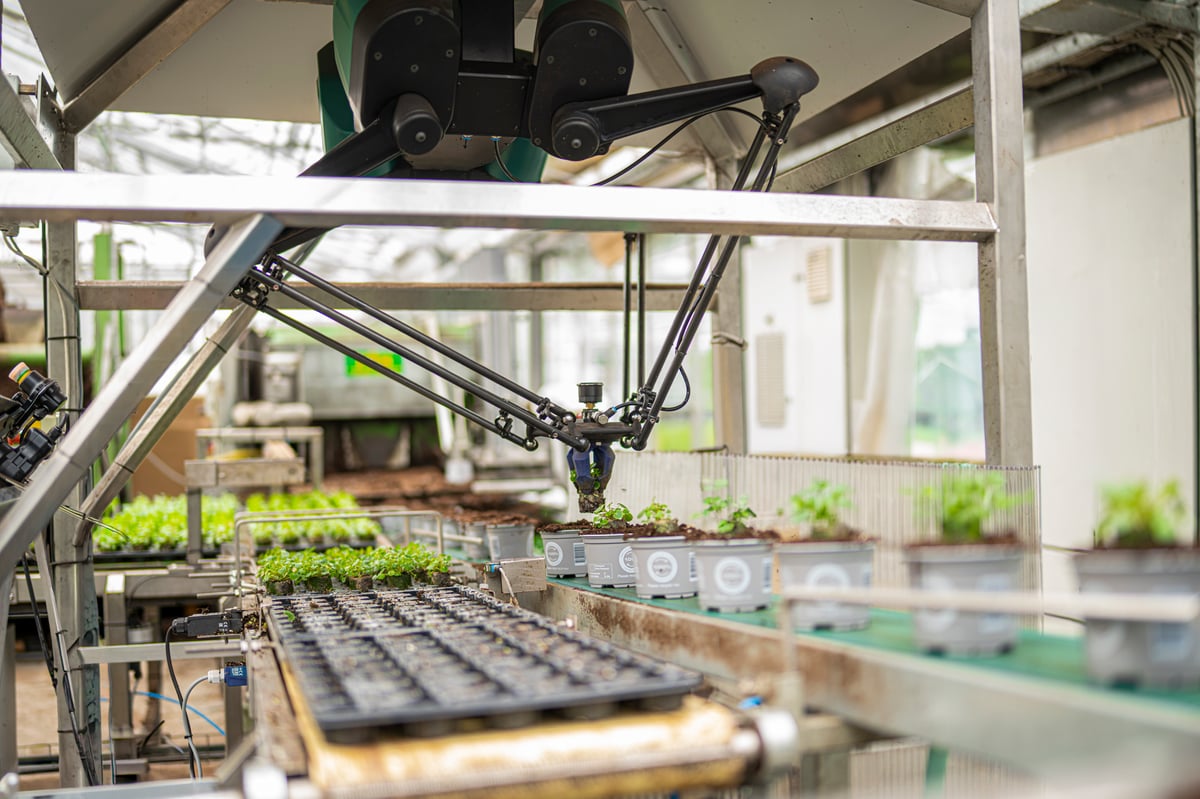
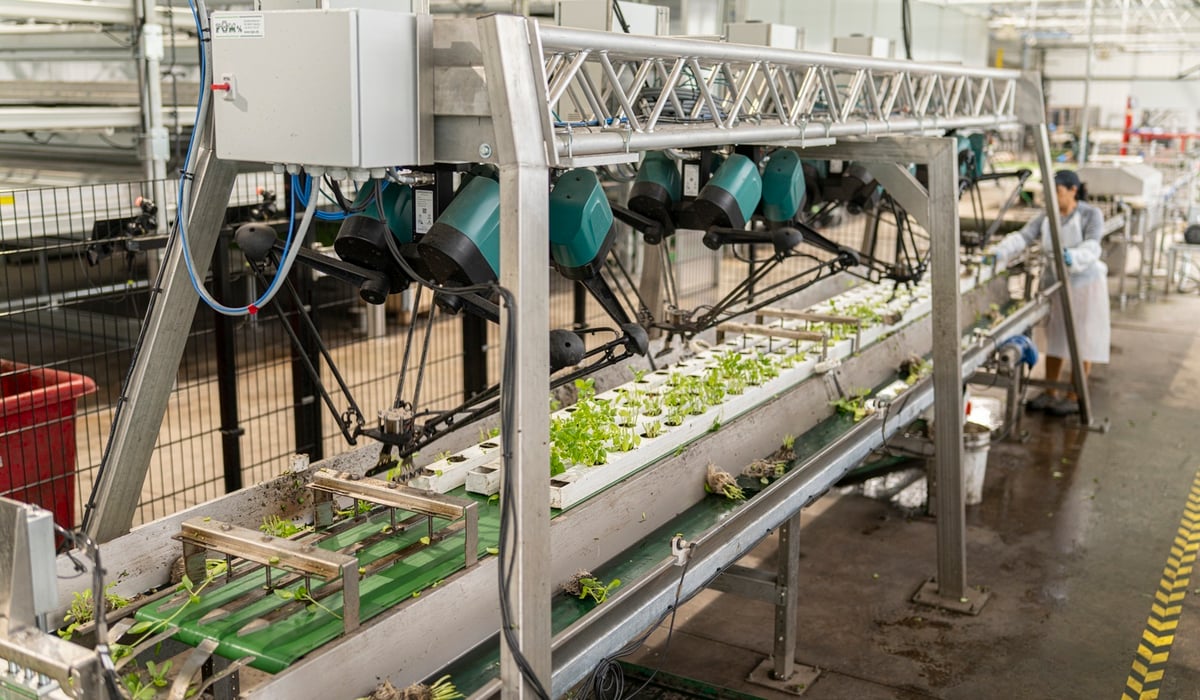
Here, a four-arm collaborative robot from 4XROBOTS is used for transplanting cuttings directly above the conveyor line in the greenhouse production process.
Because the robot is lightweight and designed to work safely alongside employees, it could be integrated into the existing production line without major changes.
According to Torben Moth Madsen, director of Rosa Danica (ByGrowers), the robot quickly became part of the daily workflow:
“It’s not always fun to do repetitive tasks like planting pots all day. Now our colleague Adrian, who is responsible for planting, can both supervise the robot and manage the rest of the process line at the same time.”
Flexible automation will shape the future of greenhouse production
As the horticulture industry continues to face labour shortages and increasing production demands, flexible automation solutions will likely play an increasingly important role.
Instead of investing in large, fixed automation systems, growers can start with smaller collaborative robots and gradually expand automation across different parts of their production process.
For many greenhouse businesses, this flexible approach offers a practical path toward modernizing production while maintaining operational agility.
To understand how robot design supports this flexibility, read: Efficiency squared – why four arms outperform traditional delta robots