Reliability is one of the most important factors when growers consider automation. In greenhouse production, unexpected downtime can quickly disrupt workflows, delay deliveries and create pressure on employees.
Plants continue to grow regardless of technical problems, and production schedules must be maintained. For this reason, many greenhouse operators are cautious when implementing automation systems that could potentially stop an entire production line.
One solution is to distribute automation across multiple smaller collaborative robots instead of relying on one large machine.
This approach can significantly reduce operational risk while still improving efficiency.
Learn more about the robot platform here
Reducing production risk in automated greenhouses
Traditional automation systems often rely on one large machine performing a critical task in the production process.
While these systems can be powerful and efficient, they also represent a single point of failure.
If that machine stops due to maintenance or a technical issue, the entire production line may come to a halt.
In greenhouse production, this can quickly become problematic because:
- plants continue to grow regardless of production delays
- labour planning is disrupted
- delivery schedules may be affected
For many growers, this level of dependency on a single machine creates uncertainty when considering automation.
Distributed robotics: sharing the workload
A different approach is to distribute the workload across multiple smaller robots.
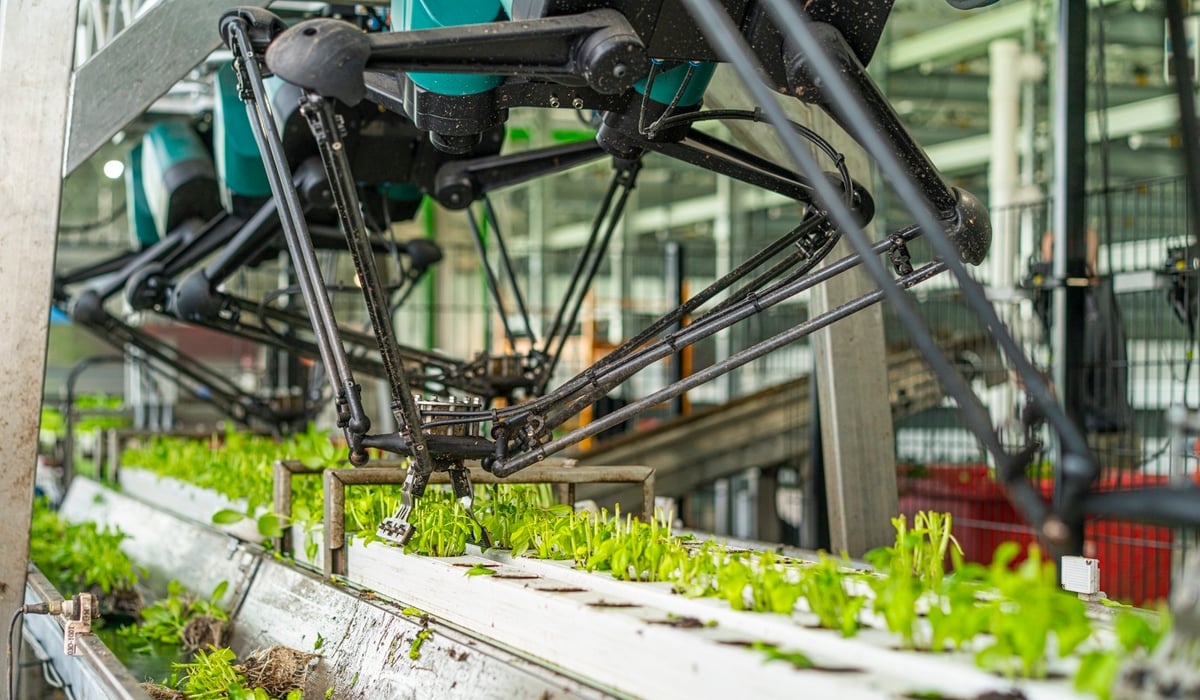
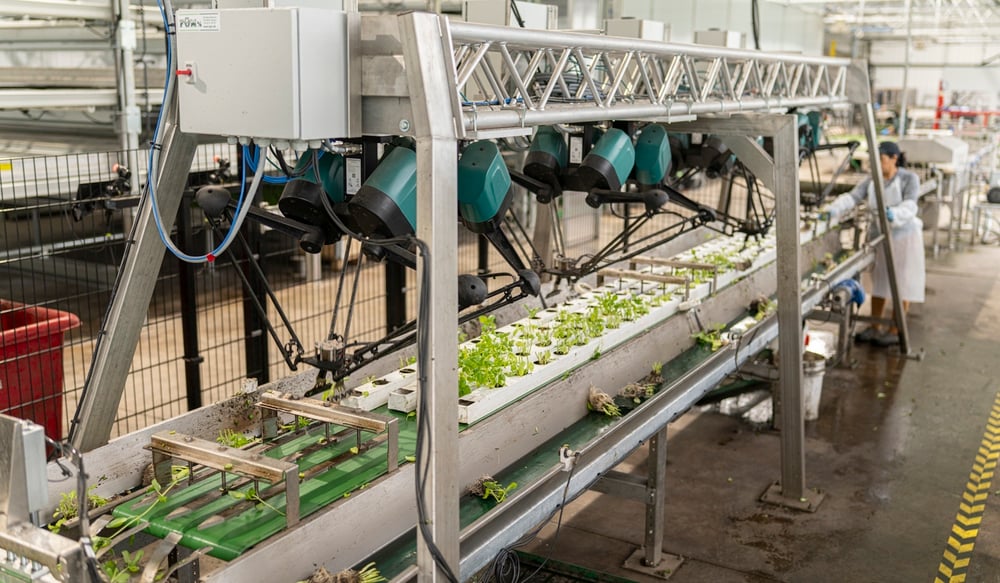
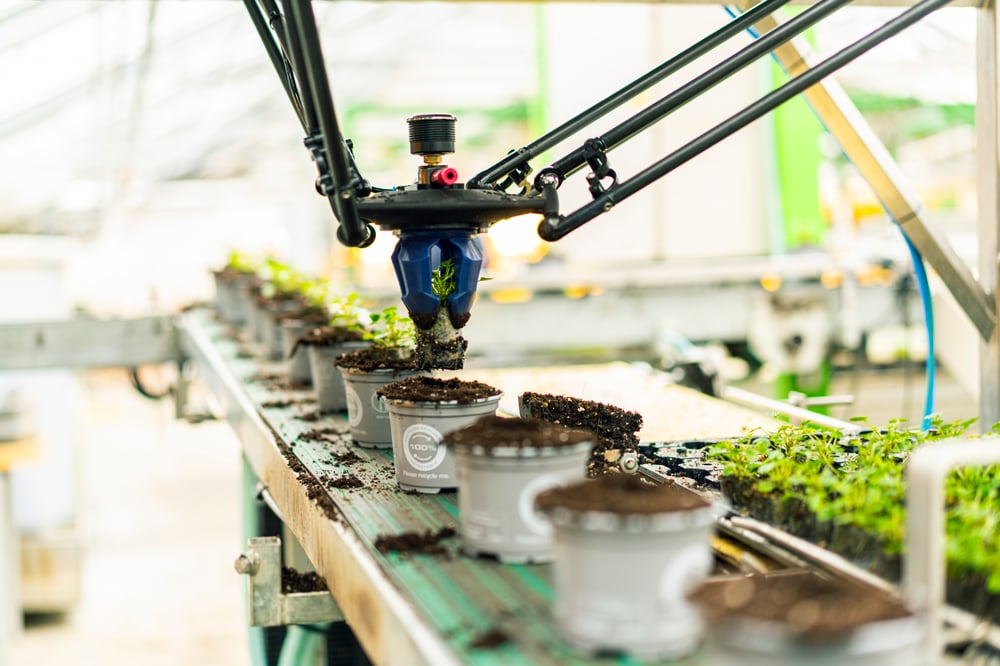
Instead of relying on one machine to perform the entire task, several collaborative robots can operate along the same production line.
For example, if four robots are installed along a conveyor line and one robot requires servicing, the remaining robots can continue operating.
This means production can continue at approximately 75% capacity instead of stopping completely.
By distributing the workload, growers reduce the operational risk associated with automation.
Gradual scaling of automation
Another important advantage of smaller collaborative robots is the ability to scale automation gradually.
Instead of investing in one large automation system, growers can start with a single robot and gradually expand their automation setup.
In greenhouse production, collaborative robots can support several steps in the workflow, including plant propagation, transplanting and tray handling.
This approach offers several practical benefits:
- lower initial investment
- easier implementation
- reduced financial risk
- flexibility to expand production capacity
As production grows, additional robots can simply be added to the system.
To understand how robots can also move between different tasks, read: Flexible greenhouse automation
Designed for stability in daily production
According to Michael Møller Nielsen, co-founder of 4XROBOTS, reliability is a key priority when developing robotics for horticulture.
“Greenhouse environments are unique. Machines must operate consistently in conditions where temperature, humidity and daily production demands vary.”
By combining flexible deployment with distributed robotics, greenhouse operators can create a production setup that is both efficient and resilient.
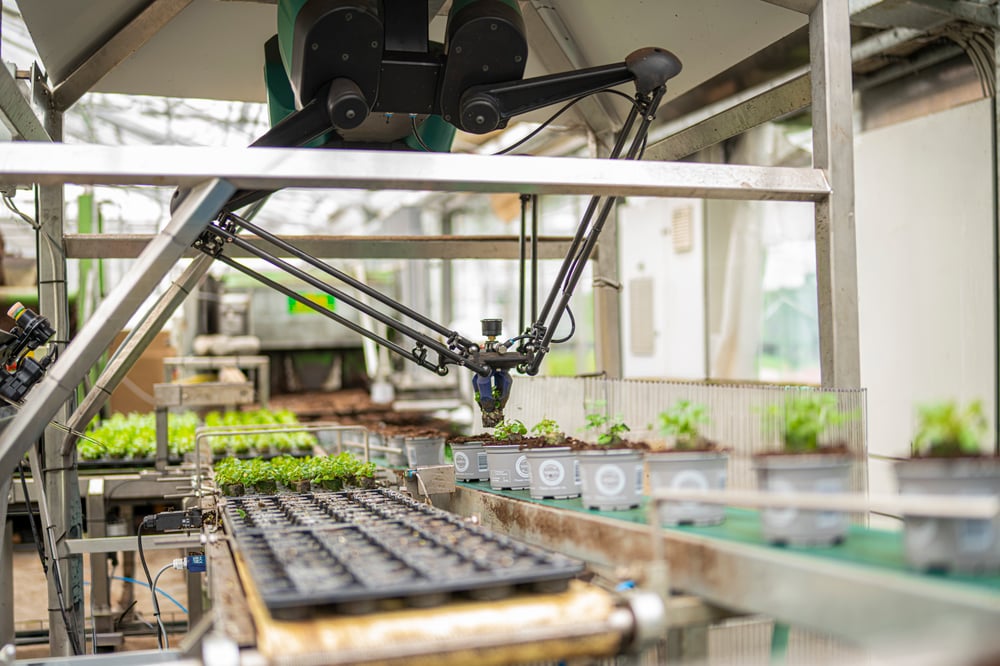
A practical example of collaborative robotics in greenhouse production can be seen at Rosa Danica in Denmark, now part of the horticulture group By Growers.
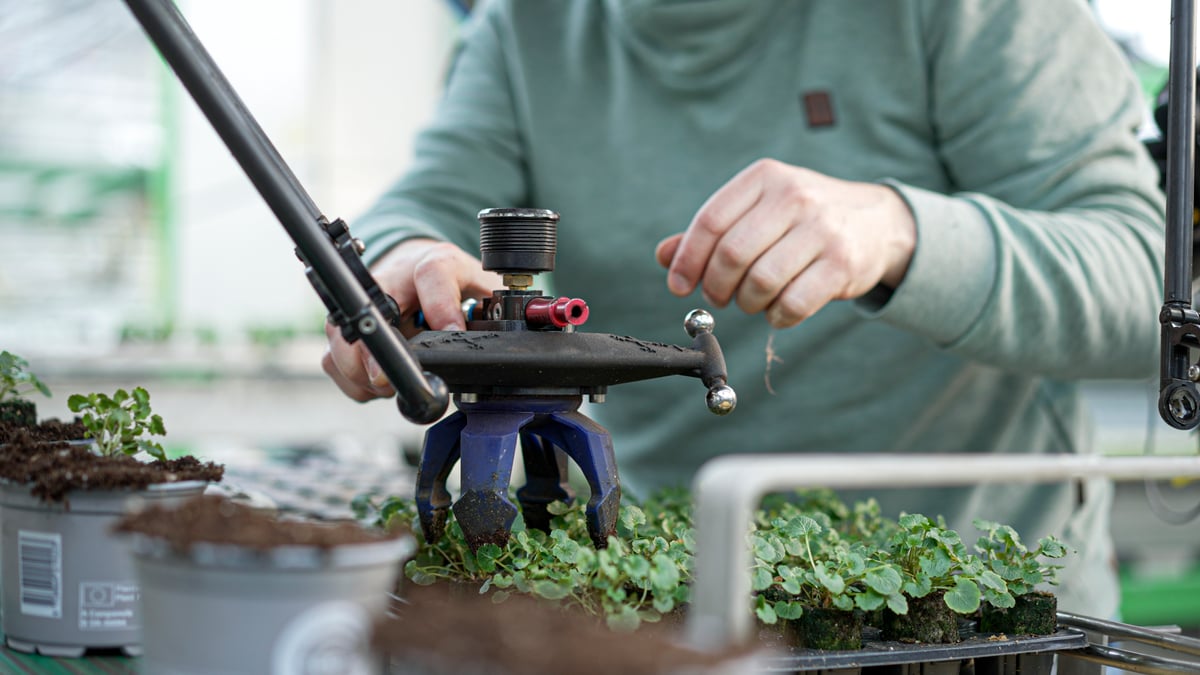
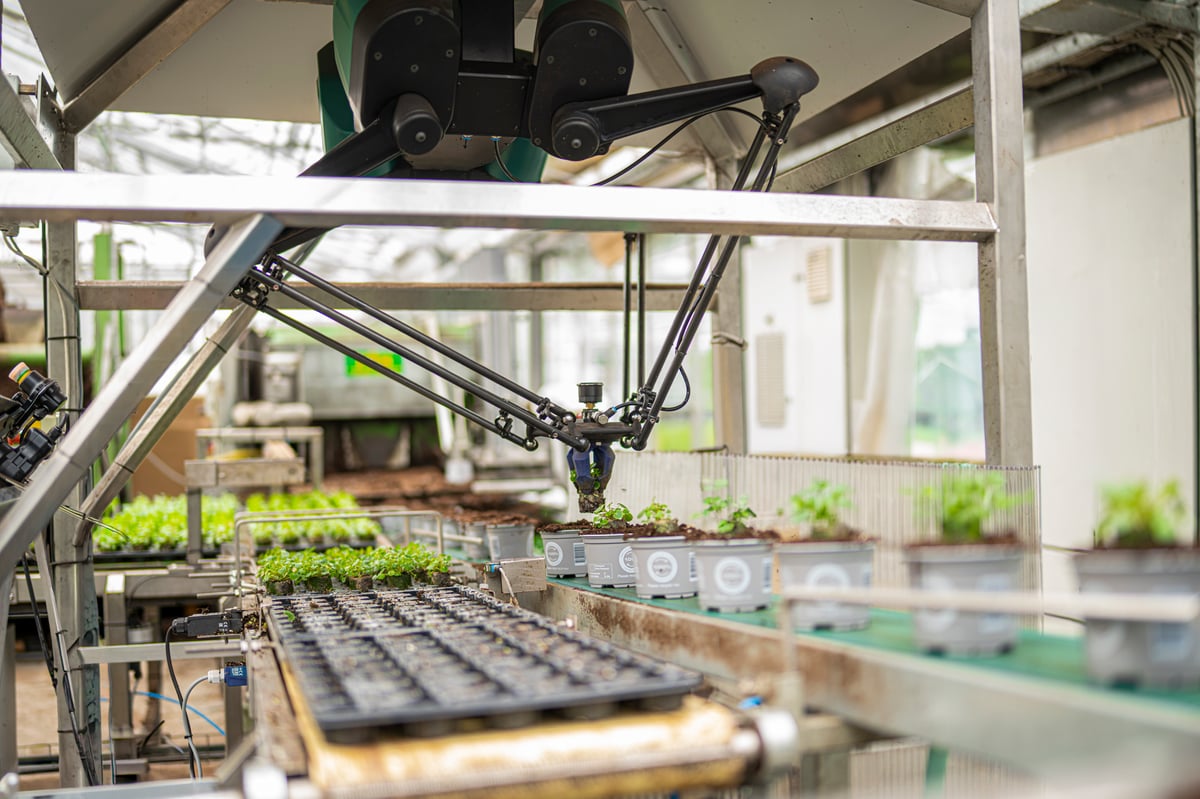
Here, a four-arm collaborative robot from 4XROBOTS is used for transplanting cuttings directly above the conveyor line in the greenhouse production process.
Because the robot is lightweight and designed to work safely alongside employees, it could be integrated into the existing production line without major changes.
According to Torben Moth Madsen, Founder of Rosa Danica (By Growers), the installation was implemented quickly and started delivering value almost immediately.
A safer path toward greenhouse automation
As automation becomes more common in horticulture, reliability will remain one of the most important factors for growers.
Distributed robotics — where multiple smaller machines share the workload — offers a practical way to reduce operational risk while improving efficiency.
For greenhouse businesses looking to modernize production without risking full production shutdowns, collaborative robots provide a flexible and scalable path toward automation.